









What does it really mean to live a spiritual life—not just in appearance, but in essence? In a world that constantly pulls us toward comfort, recognition, and indulgence, the verses attributed to Muktanand Swami offer a radical, clarifying vision of what it means to be a true sadhu. For BAPS Swaminarayan devotees, these teachings are not abstract poetry; they are practical signposts pointing toward a life centered on Hari, marked by inner freedom, balance, and unwavering devotion.
This reflection is not about renunciation for its own sake. It is about discovering the joy and stability that arise when the heart is firmly anchored in God.
Who Is a True Sadhu?
Beyond External Appearances
A sadhu is not defined by robes, rituals, or renown. The opening verse makes this unmistakably clear: a true sadhu is one who walks Hari’s way by loosening the body’s grip on the soul. This is an inner discipline—letting go of identification with comfort, ego, and physical cravings.
The sadhu’s greatness lies in what he releases, not what he displays. His life quietly testifies that spiritual progress begins when attachment ends.
Equality in All Conditions
Equanimity is one of the clearest signs of spiritual maturity. Praise and insult, joy and sorrow—these pairs usually dictate our moods and reactions. But the sadhu remains steady through them all.
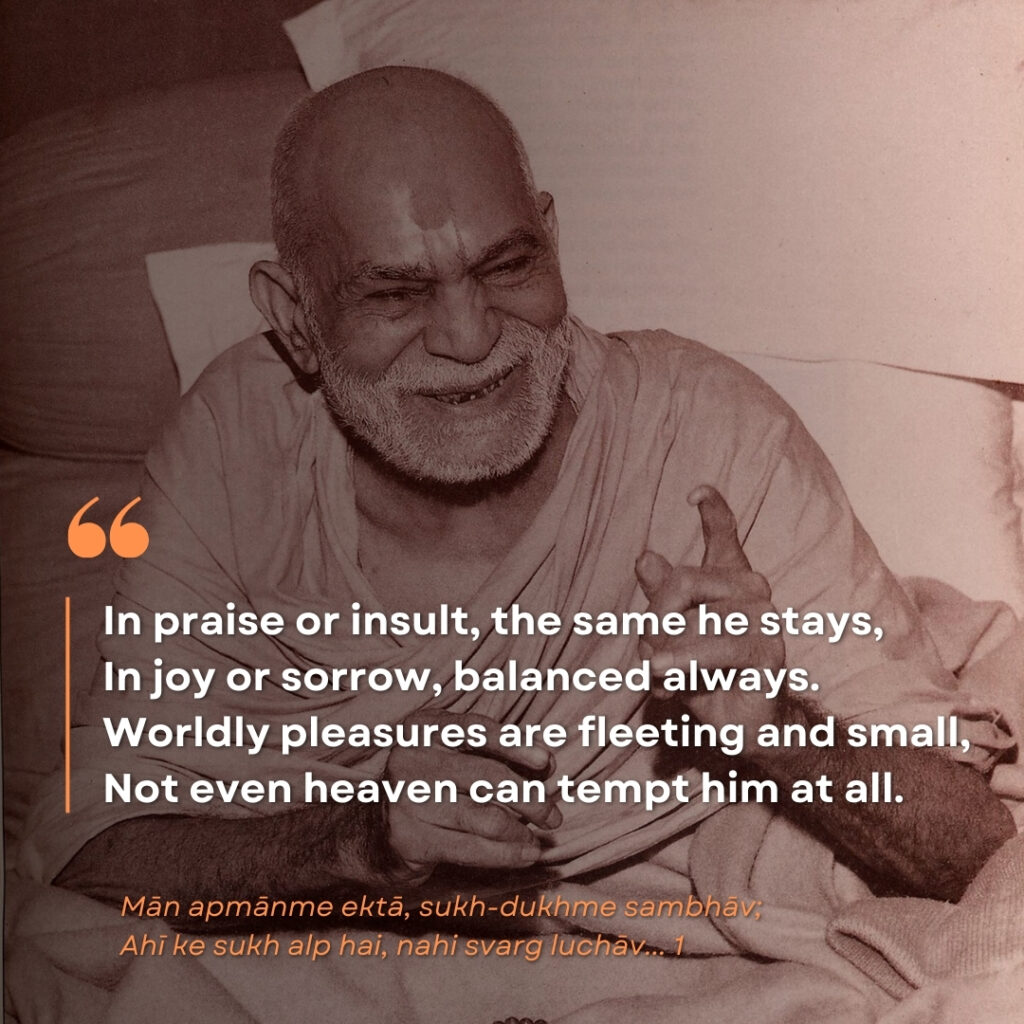
“In praise or insult, the same he stays;
In joy or sorrow, balanced always.”
This is not emotional numbness. It is clarity born from understanding that worldly highs and lows are temporary. When the mind rests in Hari, external circumstances lose their power to disturb.
Freedom from Desire and Greed
Seeing the World Clearly
Desire often disguises itself as necessity. The verses cut through this illusion with sharp honesty: worldly pleasures are fleeting, and even heavenly rewards are not worth chasing if they distract from God.
“Worldly pleasures are fleeting and small,
Not even heaven can tempt him at all.”
For devotees, this is a powerful reminder. Spiritual life is not a bargain for better pleasures—it is a complete reorientation of what we value.
Greed and Lust as Spiritual Poisons
Greed and lust are described without ambiguity. They bind the soul, distort judgment, and pull the mind away from remembrance of God.
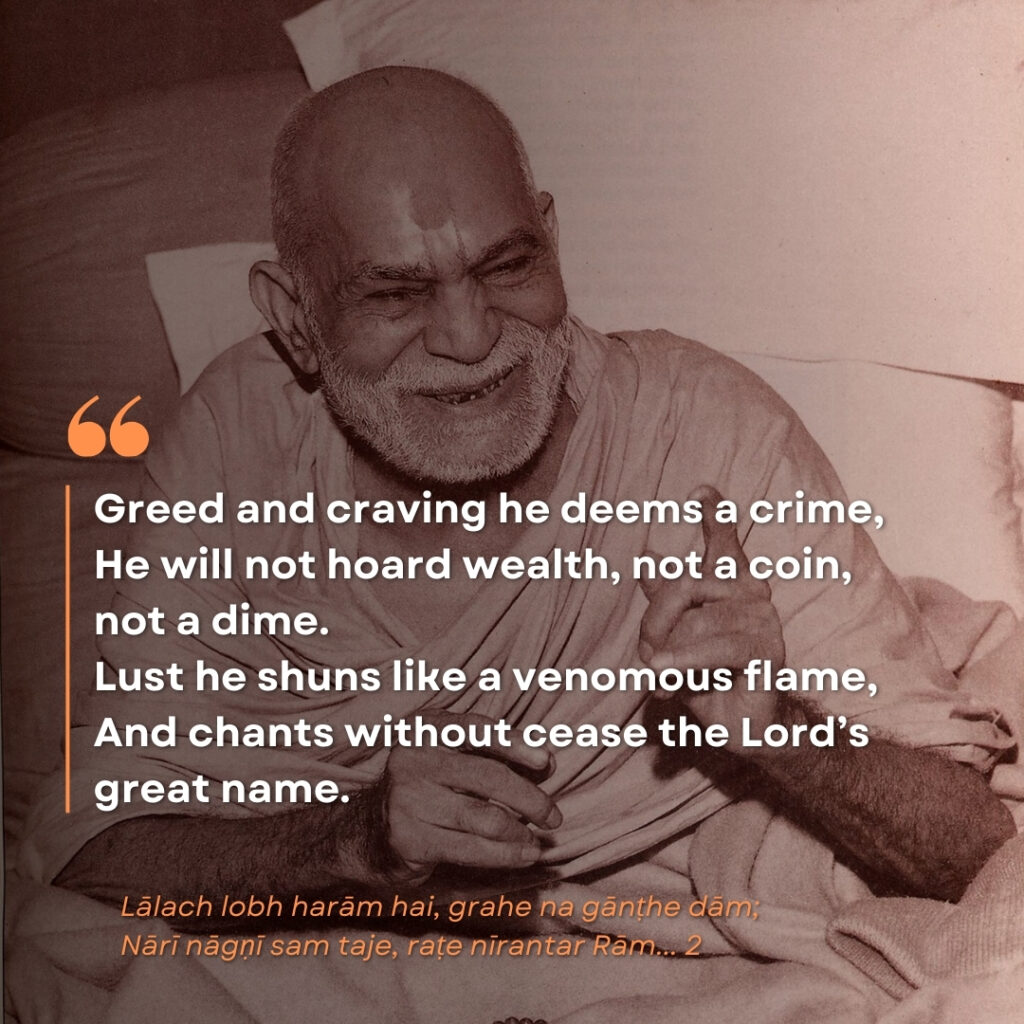
“Greed and craving he deems a crime…
Lust he shuns like a venomous flame.”
The sadhu does not merely suppress these impulses; he replaces them. Constant remembrance of Ram (God) fills the space where desire once lived. What we repeatedly think about, we slowly become.
True Vairagya: Detachment of the Heart
Letting Go of Possession and Deceit
True renunciation is internal. One may live simply yet still cling tightly to “mine” and “me.” The sadhu avoids this trap by refusing to build emotional ownership—of property, status, or relationships.
With no greed, deceit has no foothold. With no attachment, there is nothing to protect or manipulate.
The Absence of Anger
Perhaps the most striking mark of vairagya described is the absence of anger.
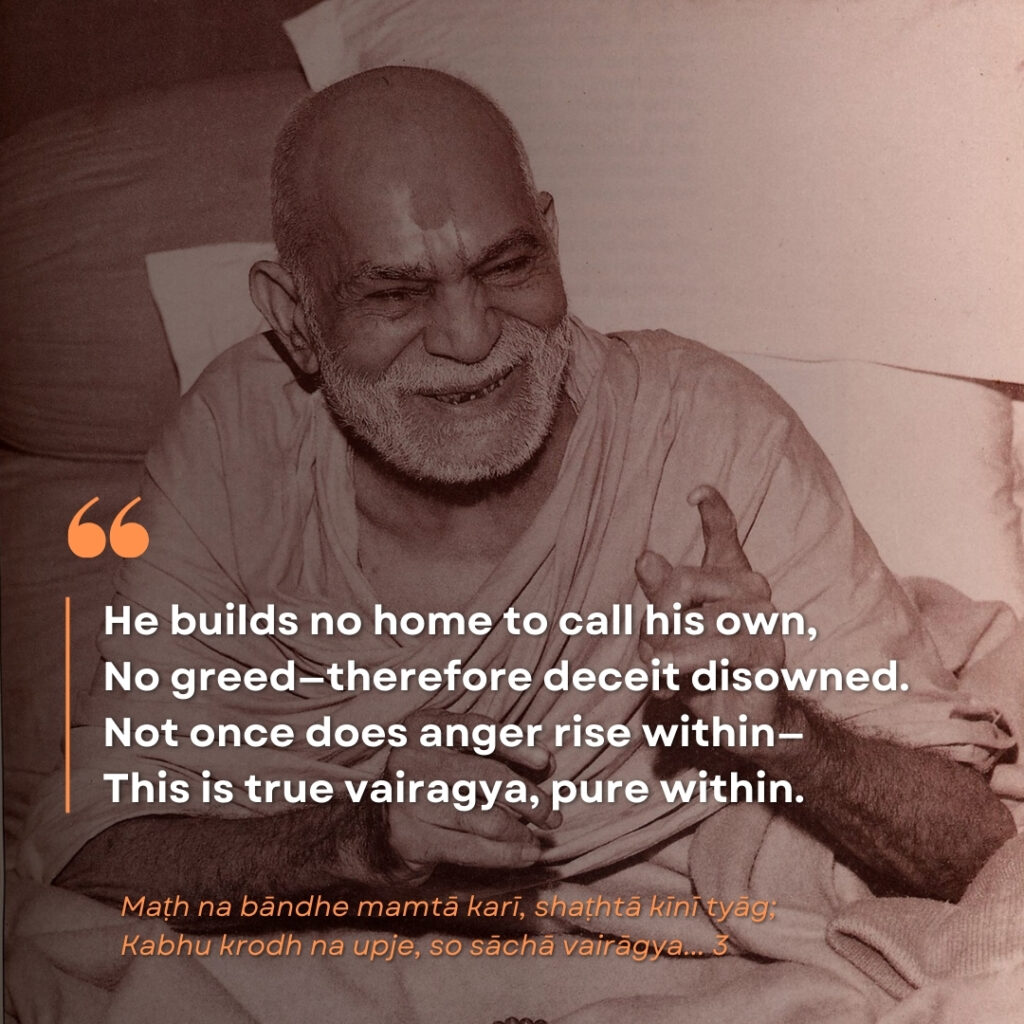
“Not once does anger rise within—
This is true vairagya, pure within.”
Anger usually signals wounded ego or frustrated desire. When both are dissolved, anger naturally fades. For devotees striving to live peacefully in family and society, this teaching is deeply practical: inner detachment leads directly to outer harmony.
A Life Anchored in Hari
Mastery Over the Senses
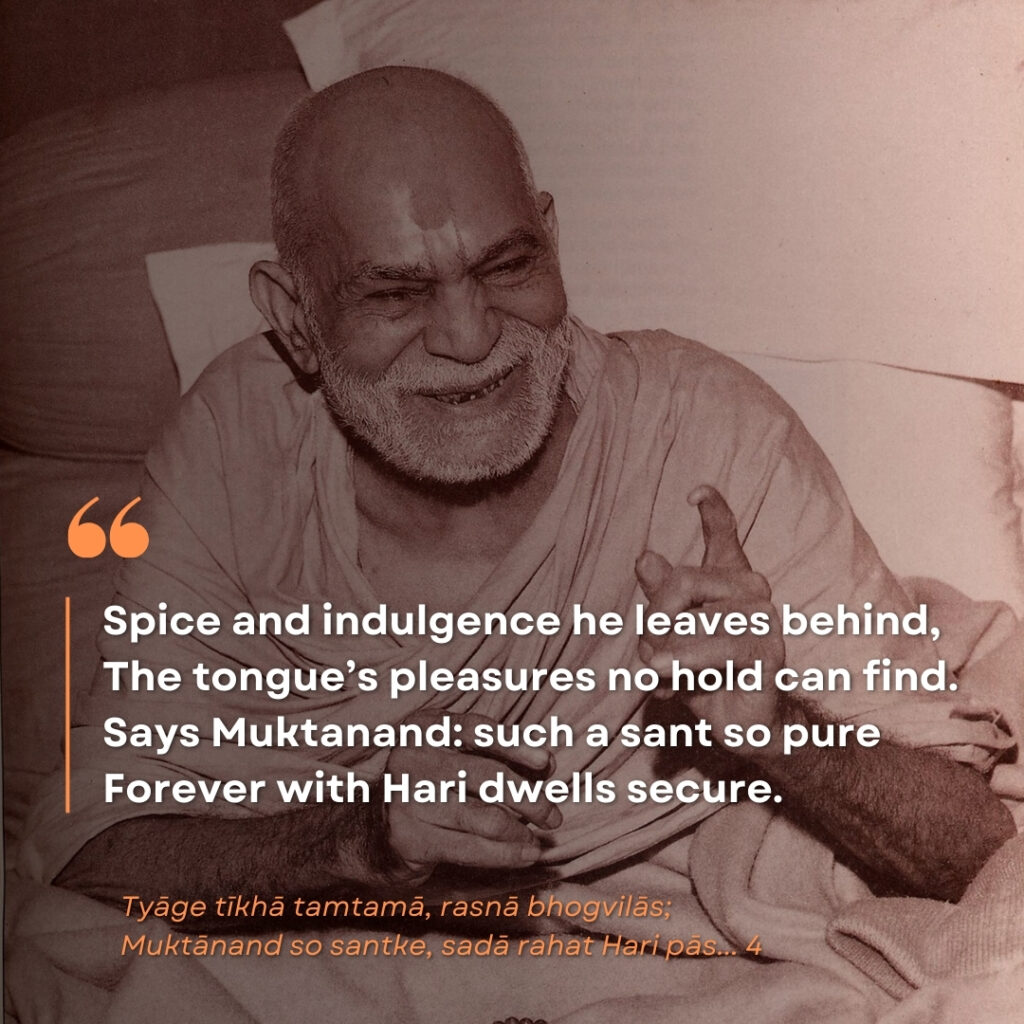
The final verse turns our attention to the senses, especially the tongue—symbol of indulgence and taste. The sadhu simplifies his life, not out of austerity, but out of focus. When the senses are restrained, the mind becomes light and attentive.
Living Always Near God
Muktanand Swami concludes with a promise:
“Such a sant so pure
Forever with Hari dwells secure.”
This is the heart of the message. Renunciation is not loss—it is proximity. Detachment does not create emptiness; it creates space for God’s constant presence.
Conclusion: The Path Before Us
These verses challenge us, but they also encourage us. They remind BAPS Swaminarayan devotees that spirituality is not measured by how much we do, but by how deeply we let go—of ego, desire, anger, and false security.
The true sadhu shows us that a life centered on Hari is not only possible, but profoundly joyful. Step by step, choice by choice, we too can walk that path—steadier in joy and sorrow, lighter in the world, and closer to God.
| Verse | Translation |
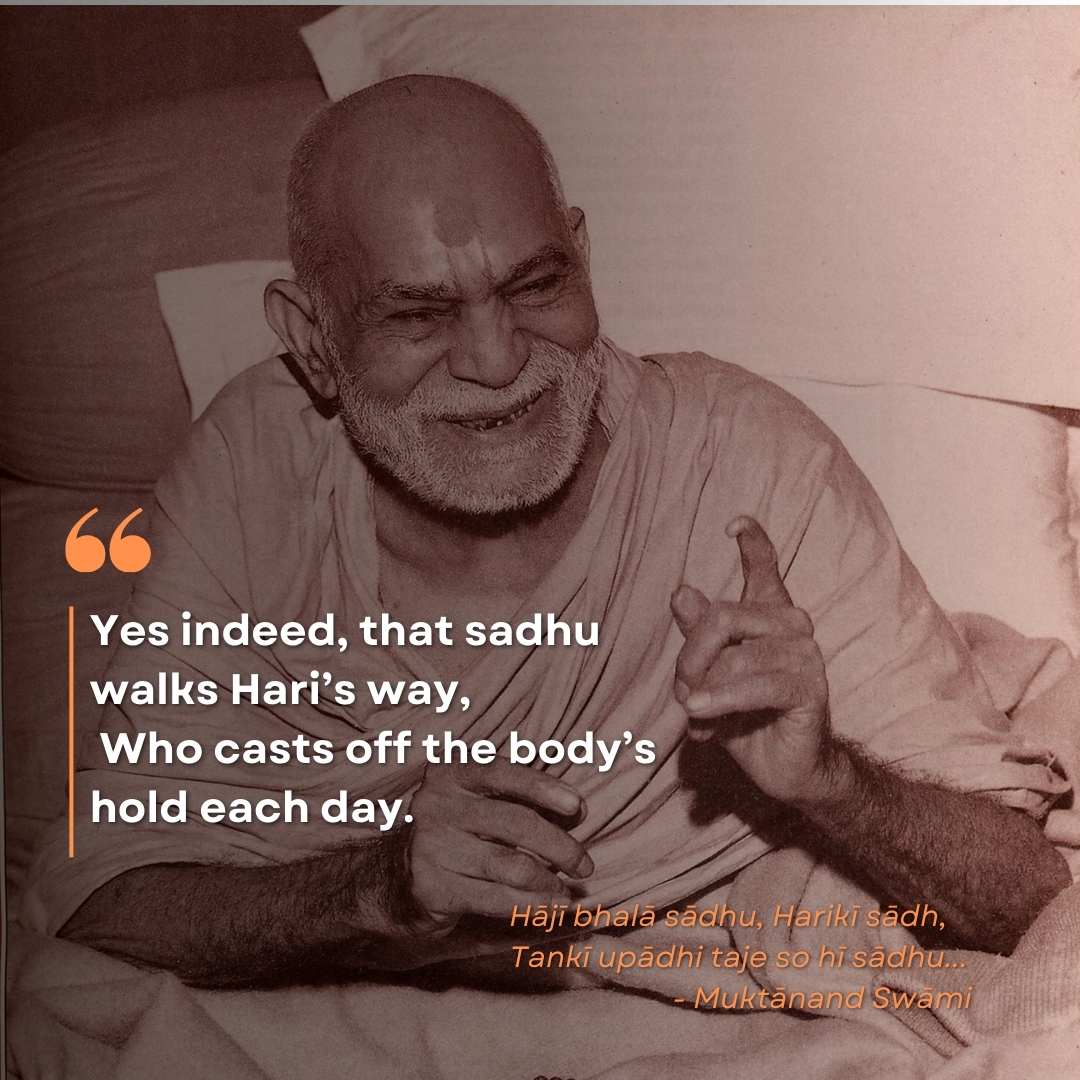
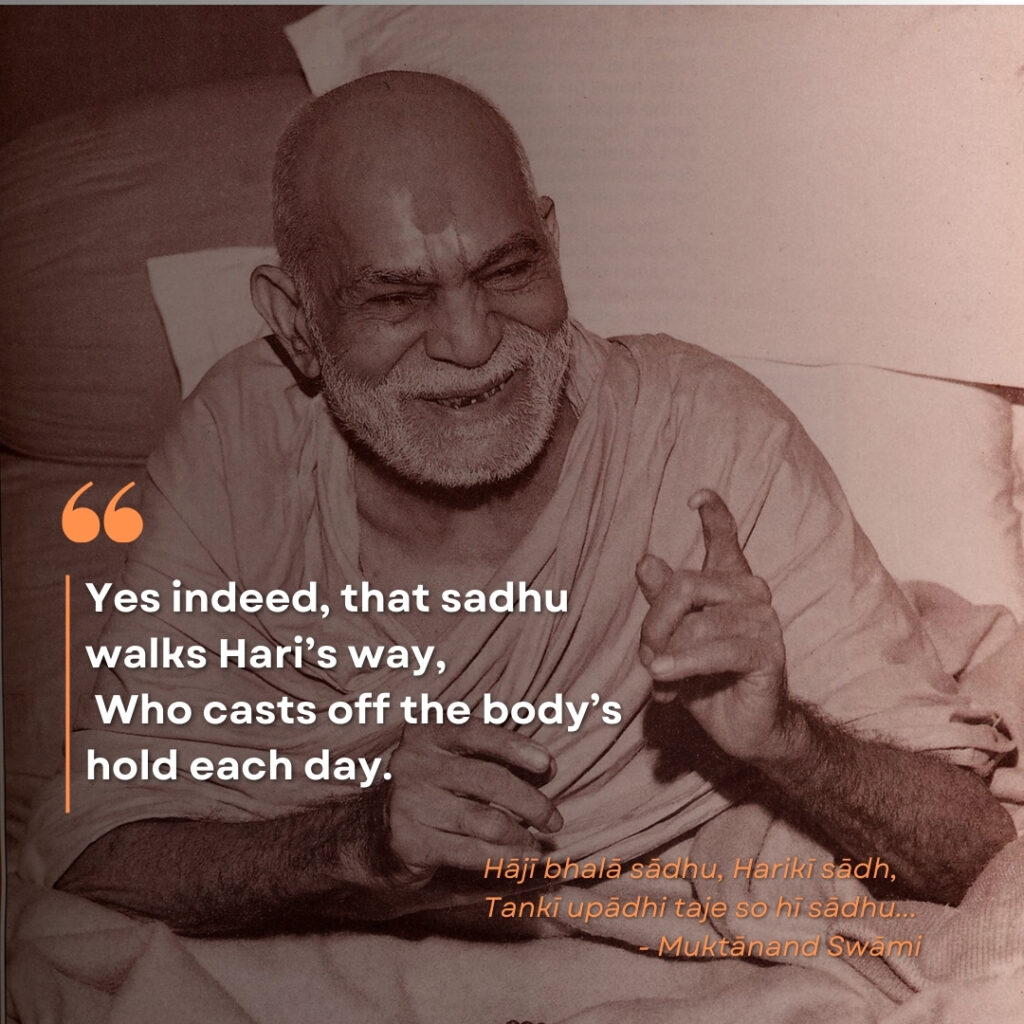
| Hājī bhalā sādhu, Harikī sādh, Tankī upādhi taje so hī sādhu… | Yes indeed, that sadhu walks Hari’s way, Who casts off the body’s hold each day. |
| Mān apmānme ektā, sukh-dukhme sambhāv; Ahī ke sukh alp hai, nahi svarg luchāv… 1 | In praise or insult, the same he stays, In joy or sorrow, balanced always. Worldly pleasures are fleeting and small, Not even heaven can tempt him at all. |
| Lālach lobh harām hai, grahe na gānṭhe dām; Nārī nāgṇī sam taje, raṭe nīrantar Rām… 2 | Greed and craving he deems a crime, He will not hoard wealth, not a coin, not a dime. Lust he shuns like a venomous flame, And chants without cease the Lord’s great name. |
| Maṭh na bāndhe mamtā karī, shaṭhtā kīnī tyāg; Kabhu krodh na upje, so sāchā vairāgya… 3 | He builds no home to call his own, No greed—therefore deceit disowned. Not once does anger rise within— This is true vairagya, pure within. |
| Tyāge tīkhā tamtamā, rasnā bhogvilās; Muktānand so santke, sadā rahat Hari pās… 4 | Spice and indulgence he leaves behind, The tongue’s pleasures no hold can find. Says Muktanand: such a sant so pure Forever with Hari dwells secure. |
Follow our Socials: Instagram | Youtube | Tiktok | Telegram | Whatsapp | Spotify | Apple Podcast

+ There are no comments
Add yours