









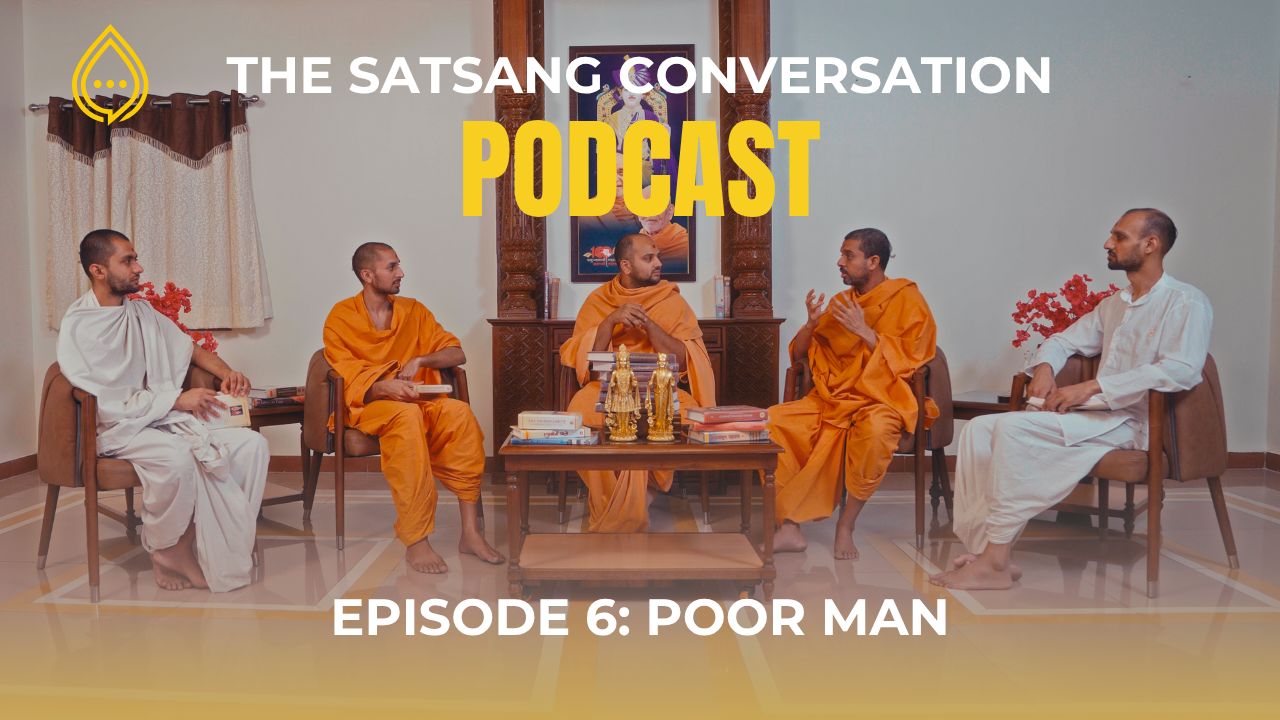
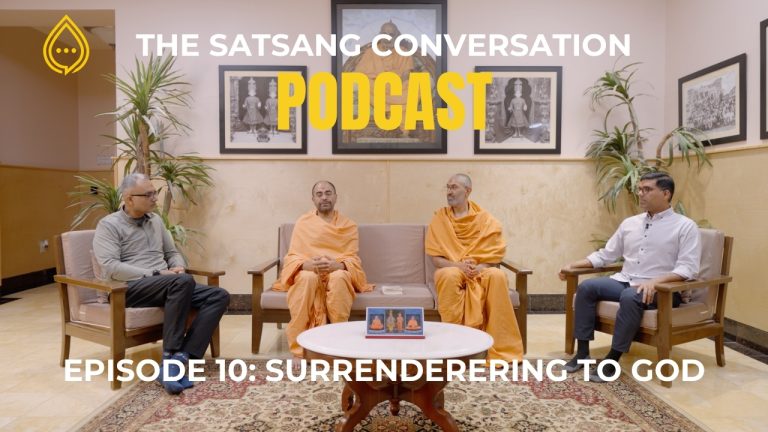
In the serene training grounds of Sarangpur, a profound conversation unfolds—one that reaches across centuries to answer a very modern question: Why, despite our best intentions, do we remain trapped by our own negative tendencies? The answer, found in a concise yet powerful scripture, offers nothing less than a transformative path to inner peace.
The Core Problem: It’s Not the Symptom, It’s the Disease
We often believe our unhappiness is caused by external circumstances—a missed promotion, a harsh word from a colleague, or a friend’s success that overshadows our own. We focus on these surface-level symptoms, pouring our energy into managing situations and people. However, the Vachanamrut Gadhada II-7 invites us to look deeper. The real disease is not the external trigger, but the internal swabhavs—our innate negative natures like ego, jealousy, and anger—that dictate our reactions.
The Illusion of “This is Just Who I Am”
In today’s world, there’s a pervasive narrative to embrace all our personality traits because they “make us who we are.” We might say, “I’m just a perfectionist,” or “That’s my personality,” using this as a justification for behavior that causes us and others pain. The Vachanamrut challenges this notion head-on. It establishes that these swabhavs are not our true identity; they are obstacles that prevent us from experiencing lasting happiness and connecting with the divine.
Key Quote: “A devotee of God resolves in his mind, ‘I do not want to retain a single swabhav which may hinder me in worshipping God,’ and yet, such inappropriate swabhavs do remain. What is the reason for this?”
Learning from History’s Unhappy Kings
History is littered with powerful figures who possessed everything the world deems valuable, yet found no happiness. The mighty emperor Napoleon Bonaparte confessed on his deathbed that he had not experienced six days of true happiness in his entire life. His boundless ambition and fear of loss—his swabhavs—poisoned his immense success. Similarly, the ancient king Duryodhana, from the Mahabharata, was consumed by jealousy of the Pandavas. He famously lamented, “The wealth of the Pandavas is eating me alive,” demonstrating that the problem was not their wealth, but the disease of envy within him.
The Gold-Standard Solution and the Practical Path
When asked how to eradicate these swabhavs, Bhagwan Swaminarayan provides a gold-standard, top-tier answer: develop vairāgya—detachment from the world and attachment to God. This is the ultimate state, where one remains steady and content in all circumstances, much like Lord Ram, who received the news of his coronation and his exile to the forest with the same equanimity.
But what about for the rest of us, who are just beginning our spiritual journey? How can we, who are still deeply connected to the world, hope to achieve this? This is where the Vachanamrut reveals its profound practicality.
The Power of “Atishay Seva”
For those who lack the high-level vairāgya of a seasoned ascetic, Maharaj prescribes a powerful, accessible remedy: Atishay Seva—intense, selfless service performed for the Satpurush, the true spiritual master.
Key Quote: “If a person lacks vairāgya but intensely serves a great saint and obediently perseveres in his observances of the injunctions of God, then God will look upon him with an eye of compassion… As a result, they’ll be eradicated immediately.”
This service is defined not by its scale, but by its quality. It is service that pushes us past our perceived limits, what Yogiji Maharaj called “haad uprant seva“—service beyond one’s capacity. It’s the spiritual equivalent of stepping out of your comfort zone to do what you thought was impossible, all for the pleasure of your Guru.
A Living Example: The Miracle of Robbinsville
The construction of BAPS Akshardham in Robbinsville, New Jersey, stands as a monumental, modern-day testament to the transformative power of Atishay Seva. Here, the principles of the Vachanamrut were not just studied; they were lived.
Eradicating Swabhavs on the Construction Site
Over 12,500 volunteers from all walks of life—doctors, students, business owners, retirees—came together to achieve the impossible. In this intense environment of devotion, swabhavs began to melt away. A senior corporate manager, accustomed to giving orders, happily took direction from a college student. A chronic procrastinator found himself completing academic assignments weeks in advance, simply to better manage his seva schedule. The inherent tribalism of “me versus you” dissolved into a profound sense of “vasudhaiva kutumbakam“—the world is one family.
Key Quote: “They didn’t feel that, ‘Oh, it is hard for me to work with a person who is 30 years older than me…’ They felt as a family.”
The Secret Ingredient: The Satpurush’s Compassionate Glance
What was the catalyst for this magical transformation? It wasn’t just the hard work. It was the krupa drashti—the compassionate glance—of the Satpurush, His Holiness Mahant Swami Maharaj. A single, simple video message from him inspired thousands to drop everything and travel across the country. His constant guidance to perform “seva with samp” (togetherness) and unity created an environment where divinity could flourish amidst the chaos of a construction site. An outside truck driver, familiar with construction sites worldwide, remarked on the unique, palpable sense of peace and cooperation he felt there.
The Path of Consistent Service
While grand projects like Akshardham are rare, the opportunity for Atishay Seva is not. The Vachanamrut emphasizes the importance of consistency—agna ma mandyo re—persevering obediently in the injunctions of God.
The Legacy of the Saints
The lives of senior saints like Doctor Swami and Tyagvallabh Swami are perfect examples of this principle. Doctor Swami, through decades of tireless service and travel, reached a state where he was so absorbed in the divine that he was oblivious to whether his shower water was hot or ice cold. Tyagvallabh Swami, from a wealthy background, embraced the humble seva of managing the kitchen for decades, tolerating all kinds of situations with unwavering steadiness. Their consistent, selfless service purified their hearts to the point where they experience a continuous, internal bliss.
Your Invitation to the Game
The final takeaway is an invitation. We can remain passive attendees of satsang, watching from the sidelines. But just as watching game film won’t make an athlete better, passive observation won’t eradicate our swabhavs.
Key Quote: “We have to decide if we’re going to be content just by staying on the sidelines… Or do we want to get into the game?”
Getting into the game means actively seeking seva. It could be setting up chairs at the local mandir, helping in the kitchen, participating in community projects, or simply changing a diaper to help a fellow devotee listen to katha. The Satpurush has declared that the entire satsang community is his body. Therefore, any service done for this community with a pure heart and a desire to please the Guru is Atishay Seva.
Vachanamrut Gadhada Section 2 – 7: https://anirdesh.com/vachanamrut/index.php?format=en&vachno=140
Vachanamrut Study Application: thesatsanglife.com/vachanamrut
Location: BAPS Shri Swaminarayan Mandir, Sarangpur (https://maps.app.goo.gl/fcuW7EkP3oqcvRft7)
+ There are no comments
Add yours